

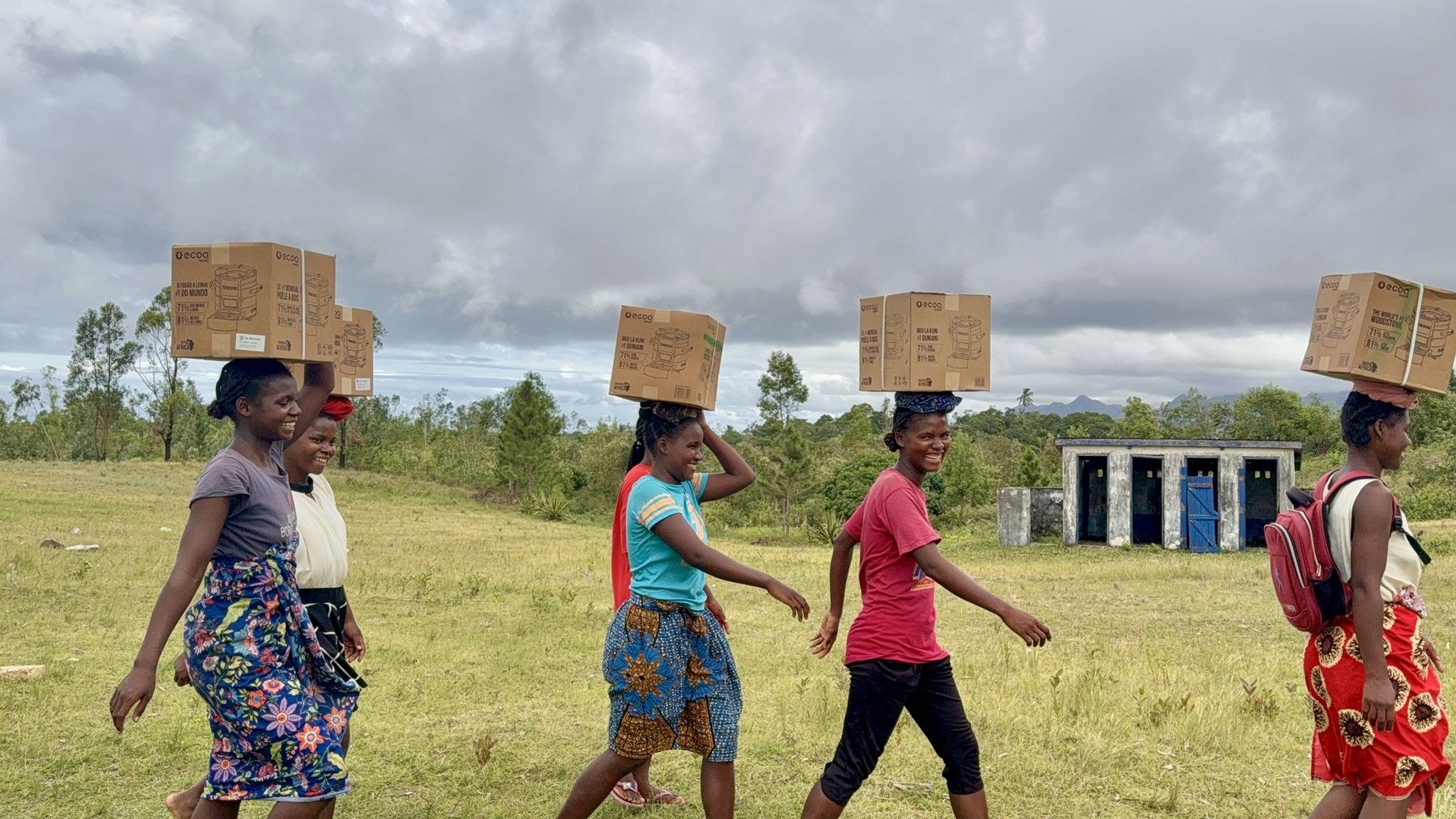
Carbon project developers face a soft version of the same question from every serious buyer: why this country, why these communities, why this intervention? The honest answer matters — it speaks to additionality, to counterfactual sustainability of the intervention’s biomass claim, to the durability of the impact story, and to the credibility of the project developer as a long-term counterparty.
For Madagascar, the answer is unusually specific. This article sets out the country context that makes Madagascar’s climate and WASH crisis distinctive — the epidemiology, the hydrology, the deforestation flux, the aid-funding gap — and explains why carbon-financed intervention there is not just useful but structurally suited to the particular problem the country faces.
The audience is corporate ESG teams, procurement analysts, and portfolio managers who need to evaluate the country-level case for Madagascar-focused impact intervention. The treatment is analytical rather than promotional.
Water access: among the world’s most severe deficits
Madagascar consistently ranks among the countries with the worst safe-drinking-water access globally. According to the WHO/UNICEF Joint Monitoring Programme for Water Supply and Sanitation (JMP), only 36% of Madagascar’s rural population has access to at least basic drinking-water services; only 9% has access to improved water sources.[1] The country ranks in the bottom 10 globally on the improved-water-sources measure.
The consequences of this are documented and severe. Diarrhoeal disease is a leading cause of under-five mortality in Madagascar, with the great majority of cases attributable to unsafe water sources.[2] The public health burden feeds into malnutrition and stunting — Madagascar’s under-five stunting prevalence is above 40%[3] — which in turn interacts with drought vulnerability to produce chronic food insecurity in the country’s dry south.
This is not a distribution problem in the sense that afflicts middle-income countries: the infrastructure has been built, in significant part, over previous decades of aid investment. It is a functionality problem. Of the estimated 10,000+ water wells built by aid programmes in Madagascar since the 1990s, approximately 40% are currently non-functional and a further 45% require significant maintenance to remain functional over a multi-year horizon.[4] The hardware exists; the sustained maintenance the hardware requires does not.
This distinction — construction-funded versus maintenance-funded — matters because it shapes what kind of intervention can actually close the gap. New construction funded by traditional donor cycles has continued to occur, and continues to add water points that themselves will require maintenance a decade hence. The binding constraint is the maintenance-funding gap, and no traditional donor mechanism finances multi-decade maintenance commitments at the scale required.
Climate vulnerability: cyclones, drought, and system compounding
Madagascar consistently appears near the top of climate-vulnerability rankings. The 2024 Notre Dame Global Adaptation Initiative index places Madagascar in the world’s 15 most climate-vulnerable countries.[5] Three specific exposures dominate.
Cyclones. Madagascar’s east coast is hit, on average, by three to four tropical cyclones per year during the November-to-April cyclone season. Cyclone frequency has been broadly stable over the last three decades, but cyclone intensity has increased materially: the frequency of Category 4 and 5 cyclones affecting Madagascar has doubled since the 1990s.[6] Cyclone Batsirai (2022), Cyclone Freddy (2023 — one of the longest-lived cyclones ever recorded), and Cyclone Chido (2024) each caused widespread damage to drinking-water infrastructure, latrine facilities, and coastal communities. Peer-reviewed climate projections estimate that cyclone intensity affecting Madagascar will increase by approximately 50% by end-century under moderate-warming scenarios, alongside significant sea-level rise threatening coastal communities.[7]
Drought and rainfall variability. Madagascar’s south has experienced multi-year drought conditions that the United Nations World Food Programme has described as producing “the world’s first climate change famine.”[8] While the specific attribution has been contested, the meteorological reality is not: rainfall in southern Madagascar has declined materially over the last two decades, and inter-annual variability has increased. The population of southern Madagascar depending on humanitarian food assistance has grown to more than one million people in the worst periods, driven substantially by the collapse of subsistence agriculture that dryland rainfall variability produces.
Deforestation. Global Forest Watch data indicate that Madagascar has lost approximately 30% of its tree cover since 2000.[9] The loss is driven by biomass demand (for cooking and, historically, for charcoal supply chains), agricultural expansion (particularly for cassava, maize, and slash-and-burn cultivation), and mining. The rate of loss has been broadly stable over the last decade, notwithstanding significant policy attention. Deforestation compounds cyclone vulnerability (through loss of coastal wind-break and mangrove buffer), drought vulnerability (through altered evapotranspiration and reduced watershed retention), and biodiversity loss (Madagascar is one of the world’s most biodiverse countries, with substantial fractions of species endemic to it).
These three exposures compound rather than merely add. Cyclones destroy water infrastructure; damaged water infrastructure increases boiling demand; boiling demand consumes biomass; biomass consumption drives deforestation; deforestation worsens cyclone vulnerability. The system is coupled, and interventions that break any part of the cycle propagate benefit through the rest.
Why the maintenance-funding gap matters
Three structural features of Madagascar’s aid ecosystem make the maintenance-funding gap distinctive.
Donor cycle length mismatch. Aid donors — bilateral (USAID, DFID/FCDO, AFD, GIZ), multilateral (UNICEF, UNDP, World Bank), and philanthropic — typically operate on multi-year but bounded project cycles. Construction is funded, community handover is scheduled, project exit is planned. The handover assumption is that local capacity will sustain operations post-exit. In rural low-income Madagascar this assumption frequently fails: there is no local cash to buy spare parts, no local technical capacity for non-trivial repairs, and no local institutional capacity to coordinate either.
Episodic versus structural funding. Cyclone response is funded reactively, after damage occurs. Damaged infrastructure is repaired (or, more often, replaced) once — and then breaks again at the next event. There is no structural mechanism financing prevention, resilience-oriented design, or long-term maintenance.
Coordination scale. Aid programmes typically work at the community or district level, matching the accountability chains of local stakeholders. The water-point infrastructure ecosystem, however, is national in scale: pumps, parts, technicians, training curricula. Making spare-parts supply chains commercially viable requires operations at national scale that no community-level programme can achieve.
Carbon finance addresses each of these features distinctively. Its 10+ year credit-issuance horizons match the maintenance-commitment timescales the infrastructure actually requires. Its revenue mechanism (credit sales against verified reductions) creates ongoing rather than episodic funding. And its cost structure incentivises operations at national scale, since national-scale operations reduce per-installation MRV costs.
Why the fNRB factor matters commercially
Madagascar’s country-level fraction of non-renewable biomass (“fNRB”) — the parameter that mediates biomass combustion into net atmospheric CO₂ — is above 0.9, reflecting the severity of the country’s deforestation flux.[10] This is a country-level fact rather than a project-level advantage, but it has material implications for the commercial case for Madagascar-focused carbon intervention.
For a clean cookstove project, the emissions reduction per stove per year is a function of baseline fuel consumption × efficiency improvement × fNRB. Where fNRB is high, more of the avoided combustion translates into avoided net CO₂, and the credit yield per stove is correspondingly larger. Similarly for safe water: the reduction per litre of avoided boiling scales with fNRB.
This does not, on its own, distinguish Madagascar from other high-fNRB geographies. What does distinguish it is the conjunction of high fNRB, severe water insecurity, high cyclone-related infrastructure damage, and an aid-funding maintenance gap. Each of these factors, individually, makes carbon intervention useful. Together, they make Madagascar structurally suited to the particular strengths of carbon finance.
Governance and institutional environment
Working effectively in Madagascar requires engagement with three tiers of institutional infrastructure.
National. The Government of Madagascar’s Ministry of Environment and Sustainable Development is the state institution most directly relevant to carbon project authorisation, alongside the Ministry of Water and Sanitation for water-specific projects. Article 6 authorisation — the mechanism through which credits become CORSIA-eligible — flows through designated national authorities working with these ministries.[11]
Regional. Madagascar is divided into 23 regions, each with regional government structures and prefects. Regional coordination on multi-district projects (as water-point or cookstove distribution programmes typically are) requires engagement at this level.
Community. At the fokontany (traditional local governance unit) and commune level, project engagement operates through elected leaders, traditional authorities, and community-level committees. Water-point committees, in particular, have historically been the site of both success and failure in WASH programming: engaged committees enable sustained operations; disengaged committees are the failure point.
Effective Madagascar-focused intervention requires all three tiers to be engaged. A project operating only at the community level cannot secure the national Article 6 authorisation that CORSIA eligibility requires. A project operating only at the national level cannot secure the community-level engagement that sustained operations require.
Where SaniTap sits
SaniTap operates in Madagascar as a matter of primary focus, not portfolio diversification. Distinctive features:
- Founded for Madagascar. SaniTap was established in 2020 with Madagascar as its operating focus. Co-founder Adriaan Mol has been based in Madagascar since well before SaniTap’s founding.
- Institutional depth. SaniTap co-founded and funds the Malagasy NGO MadAvance, which employs 80+ local staff across field operations, project management, community engagement, and monitoring. This is examined in detail in The SaniTap–MadAvance model.
- National-level engagement. SaniTap holds a Letter of Approbation from the Government of Madagascar, with work continuing toward the full Article 6 authorisation that CORSIA Phase 2 will require.
- Operational data depth. SaniTap maintains detailed geolocation, condition, household-served, and failure-mode data for the water-point pipeline, enabling prioritisation of restoration by impact-per-restoration rather than by ease-of-access.
For buyers or partners evaluating specific Madagascar-focused carbon interventions, talk to us.
Further reading
- WHO/UNICEF Joint Monitoring Programme, Progress on Household Drinking Water, Sanitation and Hygiene — Madagascar country profile.[12]
- World Bank, Climate Risk Country Profile: Madagascar.[13]
- Notre Dame Global Adaptation Initiative, ND-GAIN Country Index.[14]
WHO/UNICEF Joint Monitoring Programme, JMP dashboard. Madagascar profile at washdata.org/data/household. ↩︎
WHO, Diarrhoeal Disease fact sheet. Available at who.int/news-room/fact-sheets/detail/diarrhoeal-disease. ↩︎
UNICEF-WHO-World Bank Joint Malnutrition Estimates, Madagascar profile. Available at data.unicef.org/topic/nutrition/malnutrition. ↩︎
Global Water Partnership, Country Water Partnership: Madagascar, and various UNICEF WASH sector reports. Referenced in Madagascar National Water Sector Review documents at washdata.org/data. ↩︎
Notre Dame Global Adaptation Initiative, ND-GAIN Country Index. Available at gain.nd.edu/our-work/country-index. ↩︎
World Meteorological Organization, cyclone intensity trend data for the Southwest Indian Ocean basin. See WMO regional Tropical Cyclone Programme reports at community.wmo.int/tropical-cyclone-programme. ↩︎
IPCC Sixth Assessment Report (AR6), Working Group I, Regional Fact Sheet for Africa. Available at ipcc.ch/report/ar6/wg1. ↩︎
UN World Food Programme, communications on Madagascar southern drought. See WFP news archive at wfp.org/news. ↩︎
Global Forest Watch, Madagascar country dashboard. Available at globalforestwatch.org/dashboards/country/MDG. ↩︎
Country-level fNRB estimates drawn from CDM standardised baselines and the MoFuSS (Modelling Fuelwood Sustainability Scenarios) tool. See MoFuSS documentation at mofuss.info. ↩︎
See UNFCCC, Article 6 focal points database, for the Government of Madagascar’s designated authority for Article 6. Available at unfccc.int/topics/mitigation/workstreams/nationally-determined-contributions-ndcs. ↩︎
WHO/UNICEF JMP, as above. See https://www.who.int/. ↩︎
World Bank Group, Climate Risk Country Profile: Madagascar. Available at climateknowledgeportal.worldbank.org/country/madagascar. ↩︎
ND-GAIN Country Index, as above. ↩︎