

Safe Water Projects.
Ensuring vulnerable communities have access to clean water and reducing CO₂ emissions through innovative WASH carbon financing.
Why Safe Water is needed in Madagascar.
Madagascar is one of the world's poorest countries, and one of the few consistently getting poorer. The UN World Food Programme has described Madagascar as facing "the world's first climate change famine," with tens of thousands of people already suffering catastrophic levels of hunger and food insecurity after four years without adequate rain.
"This is unprecedented. These people have done nothing to contribute to climate change. They don't burn fossil fuels — and yet they are bearing the brunt of climate change." Shelly Thakral, UN World Food Programme
In Madagascar, only 36% of the rural population has access to at least basic drinking water services, and only 9% to improved water sources — the eighth-lowest ranking in the world. Most families use unsafe water from rivers, causing water-borne disease, especially diarrhoea, which contributes to malnutrition and stunting and exacerbates the effects of drought and poverty.
SaniTap's Safe Water carbon project is restoring access to safe drinking water for hundreds of thousands of people across rural, low-income communities. We do this by rehabilitating non-functioning rural wells and handpumps and maintaining them for a decade or more.

911 water systems, 283,000 people.
SaniTap and MadAvance operate one of Madagascar's largest professionally-maintained community water portfolios: 773 hand pumps and 138 piped water systems, serving roughly 283,000 people across the east coast, the South and Alaotra-Mangoro. Every system is enrolled in the Gold Standard safe-water carbon programme (PoA GS12600, VPA GS12601) and planned for CORSIA certification; carbon revenue funds fifteen-plus years of operations and maintenance.
773 rural hand pumps.
723 hand pumps rehabilitated since 2023 in Anosy and Analanjirofo, serving ~126,000 people (about 175 people per pump, 1 km catchment, conservatively capped). A further 50 pumps in Marolinta (Androy) are nearly complete — 40 rehabilitated wells and 10 new manually-drilled boreholes, all fitted with locally-produced Canzee pumps, reaching another ~11,000 people.
Every pump is monitored via mWater (functionality and water quality on a public dashboard) and receives regular preventive maintenance by MadAvance repair teams, alongside ongoing hygiene and gender promotion. The plan is to consolidate at 1,000 pumps by 2027, then hold — with future expansion focused on piped systems.
138 piped systems.
Operated through Endur'O, a SaniTap / NatuRano joint venture: 134 systems in the South (~131,000 people) and 4 peri-urban systems in Alaotra-Mangoro east of Antananarivo (~15,000 people). Every system is fitted with our in-house prepaid NFC Smart Tap — 300 taps deployed, an improved version now rolling out — enabling cashless per-litre metering, mobile-money top-up through franchised shopkeepers, and a real-time dashboard.
Rehabilitation includes solar-powered boreholes to supplement failing springs, on-site chlorination, and smart metering as standard. Two revenue streams support operation: water sales (~90%) and carbon credits (~10%, funding repair and maintenance). Long-term target: 500 rural piped systems reaching 500,000+ people.
A multitude of reasons explain why most of Madagascar's piped water systems — often built by NGOs with donor money — break shortly after construction, never to be repaired again. Everything from lack of spare parts, absent technical capacity, remote locations, untrained staff: the list is long. First-principles thinking, though, shows that a single reason underpins it all: money. When properly funded, spare parts, transport and qualified staff are easily solved, and technically maintaining water systems is hardly rocket science. Solve the problem "where does the money come from" and you solve water sustainability in Madagascar. Endur'O does this by improving water sales revenues, reducing costs through clever tech, adding a carbon-credit revenue stream, and achieving economies of scale.
How safe water prevents CO₂ emissions.
In the absence of affordable treatment alternatives, contaminated water must be boiled — which requires firewood collected from natural forests. This emits CO₂ and contributes to deforestation. Restoring safe drinking water access prevents these avoidable emissions.
SaniTap's Safe Water project generates traceable, high-quality carbon credits by providing direct access to safe drinking water. There are over 10,000 water wells in Madagascar; around 40% are completely non-functioning, and another 45% are significantly damaged and require maintenance. These wells and handpumps were constructed by aid and development organisations but have fallen into disrepair due to absent technical repair skills, lack of organisational capacity or spare parts, poverty, or extreme climate events such as cyclones and drought.
SaniTap has identified those wells that will have the greatest impact when restored — with detailed condition, geolocation, maintenance/repair required, households served, community elders, make, usage, and failure-mode data. This depth of knowledge enables fast, effective restoration of safe drinking water access for hundreds of thousands of people.
Access to safe drinkable water is a basic and universal human right, since it is essential to human survival and, as such, is a condition for the exercise of other human rights. — Pope Francis, Laudato Si' (2015)
Beyond carbon: full impact.
In addition to reducing CO₂ emissions, SaniTap's Safe Water projects deliver substantial social, environmental, and economic co-benefits. The project contributes to seven UN Sustainable Development Goals: 1 — No Poverty · 2 — Zero Hunger · 3 — Good Health · 5 — Gender Equality · 6 — Clean Water and Sanitation · 13 — Climate Action · 15 — Life on Land.
Gold Standard verified.
SaniTap's Safe Water project is developed under the Gold Standard methodology for Emission Reductions from Safe Drinking Water Supply (ERSDWS v1.0).
By restoring and maintaining access to safe water sources, the project eliminates the need for households to boil water using biomass fuels — generating measurable and conservatively calculated emissions reductions. The resulting Verified Emission Reductions (VERs) are issued under the Gold Standard for Global Goals following independent third-party validation and verification.
SaniTap's credits are developed to the optional higher-level gender-responsive certification, with proactive gender analysis and targeted actions to advance gender equality and women's empowerment. Credits are also aligned with the ICVCM Core Carbon Principles, ensuring each credit represents a real, verified, and high-quality emissions reduction supported by strong social co-benefits and rigorous oversight.
Explore the restored water points.
Every water point SaniTap and MadAvance restore is registered on mWater — the WASH-sector data standard used by governments, NGOs, and multilaterals. The interactive map below is the live register: click any point to see its type, the community served, the sponsor, and before-and-after photos where captured.
Project partners and stakeholders.
SaniTap seeks constructive feedback so any project we develop benefits from the views, perspectives, and experience of all interested stakeholders — without exclusion. In the early stages of every project we engage affected stakeholders and discuss potential environmental, social, and economic impacts. Stakeholder consultation is a process, not a single event — feedback channels remain open throughout the project lifetime.



The science and delivery model behind Safe Water

How safe water displaces carbon emissions — the boil-water story
Safe-water carbon credits are less intuitive than clean-cookstove credits, yet the accounting logic is rigorous. This piece walks through the counterfactual...
12 MIN READ Methodology
Suppressed demand — the baseline concept that makes safe-water carbon credits work
Suppressed demand is the accounting principle that lets a safe-water or clean-cooking carbon credit be measured against the consumption a household should have,...
14 MIN READ Safe drinking water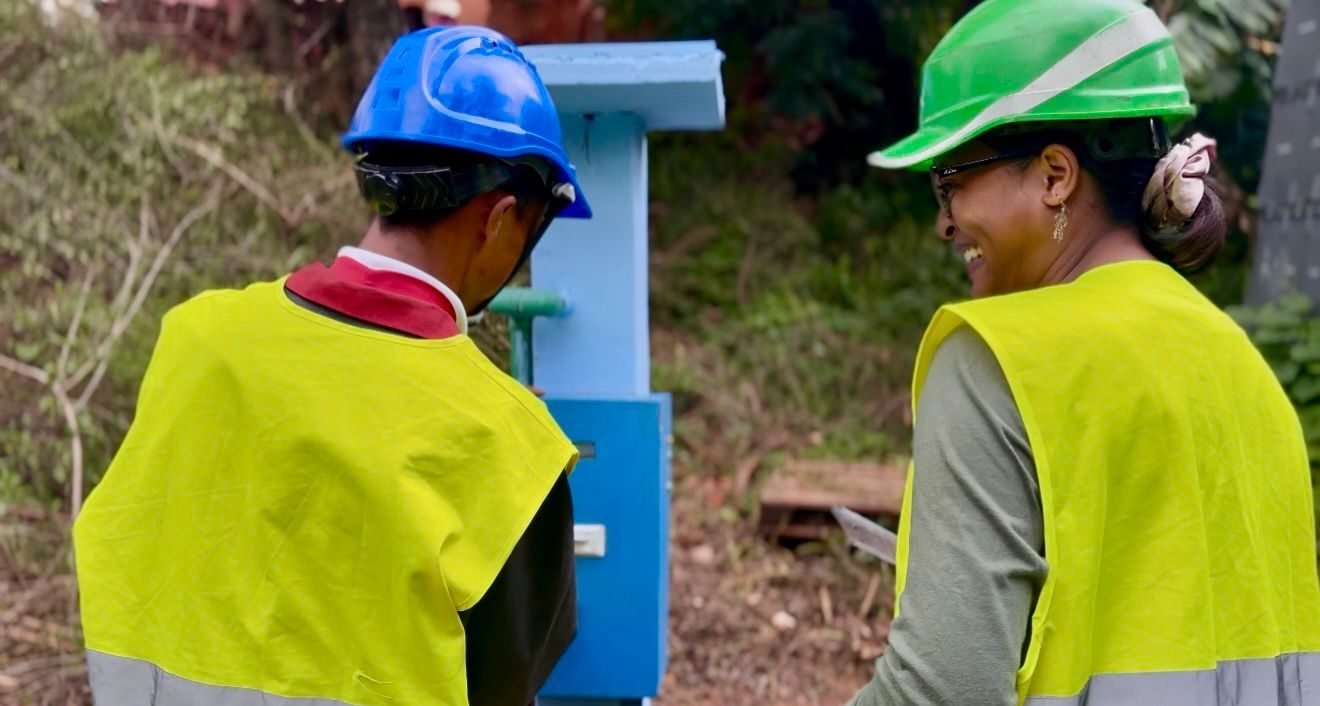
Piped water at scale — how Endur'O turns a fragile utility into a durable one
Most piped water systems in rural Madagascar break shortly after they are built and are never repaired. First-principles thinking shows why — money — and...
9 MIN READ Impact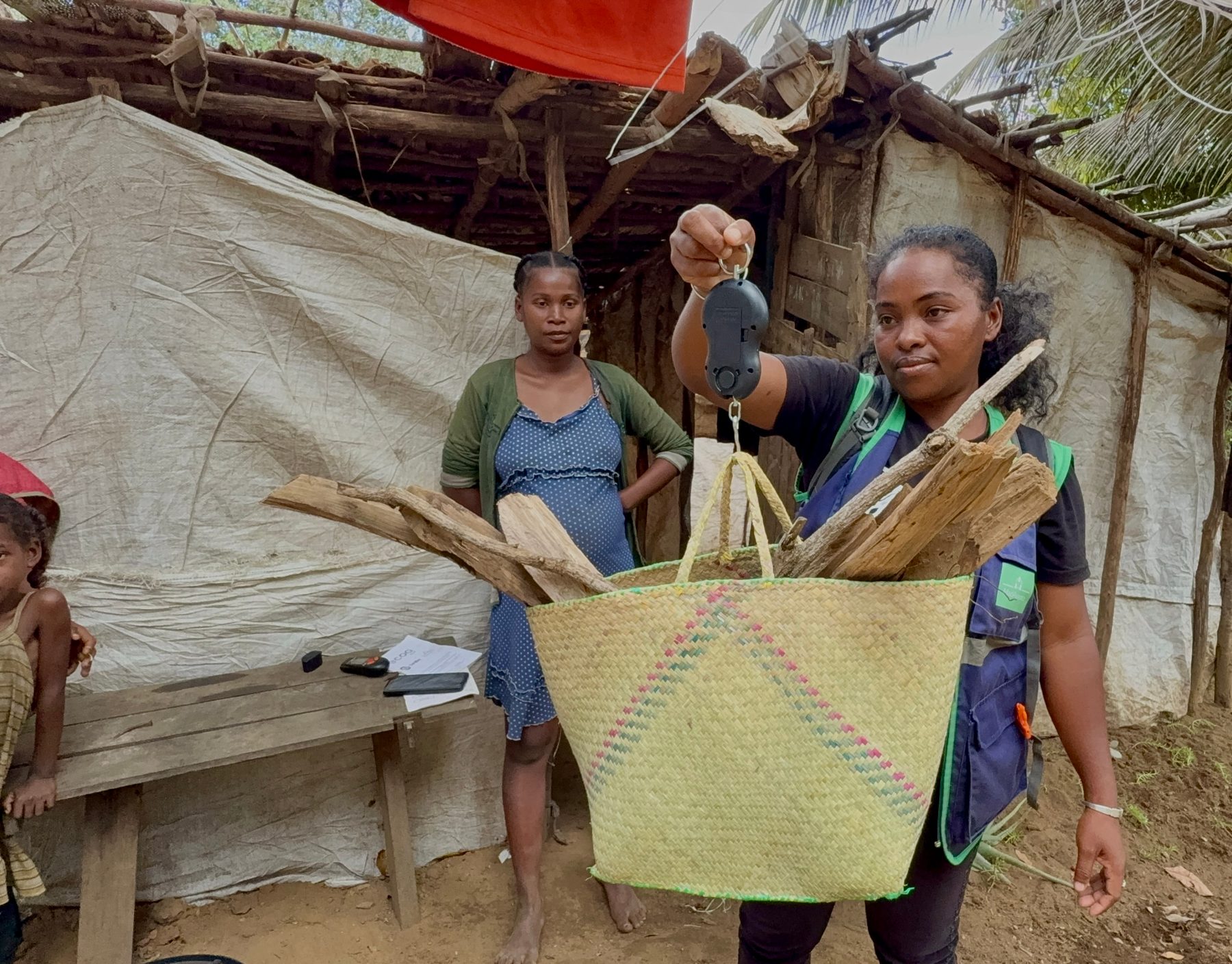
Impact as outcome — theory of change and the discipline of behavioural monitoring
Impact is not a number written on a slide. It is a household cooking cleaner three years after the stove was distributed, a village drawing safe water twelve...
12 MIN READ