

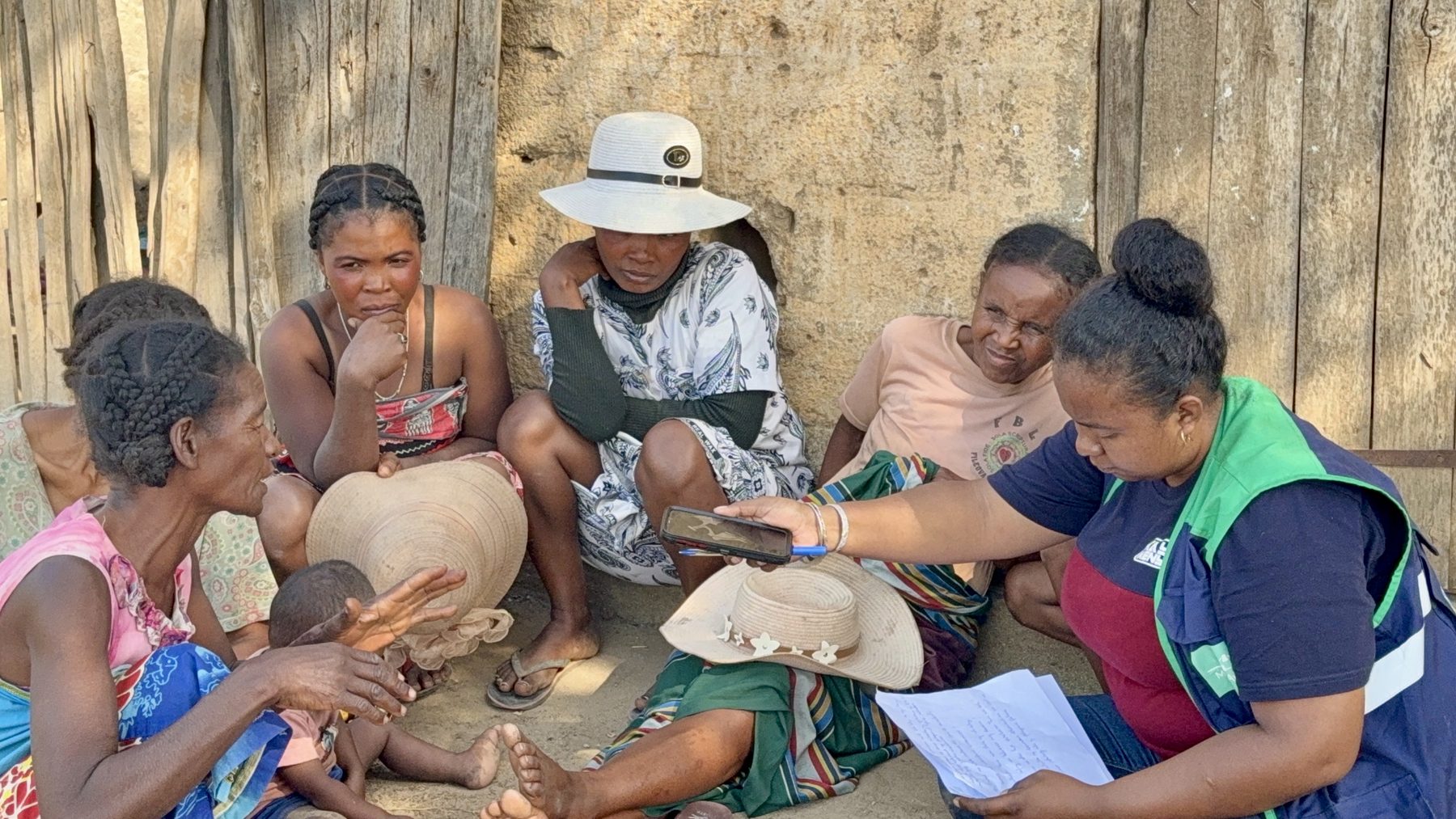
Every household in rural Madagascar that cooks on a three-stone fire has a woman standing over the smoke. Every household that fetches its drinking water from a distant river or a broken pump has a woman or a girl walking the two hours each way to carry it. Every household without a functioning stove or safe source has a woman making the daily choices — what to burn, whether to boil, when to send a daughter for water instead of to school — that shape her family’s health, her children’s education, and her own time.
Clean cooking and safe water interventions land in one of the most gendered corners of daily life anywhere in the world. What a programme does about that gendered reality determines whether the intervention deepens inequality or begins to shift it. Doing nothing about it — being gender-blind — is itself a choice, and it is the wrong one in this context.
This article sets out the difference between gender-sensitive and gender-responsive project design, why SaniTap chose the more demanding standard, and the concrete things we do to make the choice real.
In one minute
- Gender-blind: ignores gender. Assumes the household is one thing and the intervention hits it uniformly. Wrong for cooking and water, where women bear almost all the burden.
- Gender-sensitive: notices gender. Recognises women and girls are affected differently. Does no harm. Reports disaggregated numbers.
- Gender-responsive: acts on gender. Designs the intervention to address the differences, allocates resources deliberately toward closing gaps, and monitors gender-specific outcomes over time.
- Gender-transformative: goes further. Attempts to change the underlying norms and power structures that produce the inequality.
- SaniTap runs at the gender-responsive level, formally certified through the Gold Standard’s optional higher-level gender-responsive certification, and monitors gender-specific outcomes through the crediting period rather than only at baseline.
- The strongest single evidence: 2.55 hours per household per day of time returned to women and girls, verified in Monitoring Report MP1 (2025) across the 90,241-household clean-cooking cohort. This is the daily consequence of the design choice.
Why cooking and water are the most consequential interventions for women
The gender load of household cooking and water collection in low-income rural Madagascar is not marginal. It is close to total.
Cooking. In the vast majority of rural Malagasy households, women do all the cooking, and the older daughters begin to share the work from about age eight. That includes fuel collection — walking to gather firewood, sometimes for hours a day — and the direct exposure to smoke from open fires or low-efficiency traditional stoves. Indoor air pollution from biomass cooking is one of the largest single causes of respiratory disease among women and children in low-income countries, and its burden falls disproportionately on the person at the stove.
Water. In rural households without a functional close source, water collection is women’s and girls’ work in the overwhelming majority of cases. A typical unrestored area sees women walking two hours a day, on average, to fetch water — often heavy, often carried on the head, often from a source that is not safe. The health consequence is waterborne disease from unsafe water and boil-water fuel demand; the time consequence is opportunity lost from paid work, from schooling, from rest.
The scale here matters. When SaniTap distributes 120,000 improved cookstoves or restores a hand pump in a village of 175 people, the beneficiaries of the intervention are not a demographic abstraction. They are almost all women and girls, and the change in their daily lives is the largest single outcome of the intervention.
The four-step ladder — from gender-blind to gender-transformative
The development sector uses a four-step categorisation for how a project engages with gender. The framing is UN Women’s; the same architecture underlies the Gold Standard’s Gender Equality Requirements and Guidelines.[1]
Step 1: gender-blind
A gender-blind project ignores gender in its design and measurement. The household is treated as a unit. Beneficiary counts are not disaggregated. Effects on women are neither considered in design nor measured in outcome.
Most legacy infrastructure projects are gender-blind. The consequence in cooking and water is that some are worse than useless: a stove designed without consultation may not fit local cooking practice; a water point sited without gender input may end up in a location dangerous or inconvenient for women to use; a maintenance model without women in it may fail because the actual users are excluded from decisions about their own source.
Step 2: gender-sensitive
A gender-sensitive project notices gender and does no harm. It disaggregates its beneficiary numbers by sex. It reports on gender in its narrative. It consults women in stakeholder engagement. It is aware.
Gender-sensitivity is the minimum acceptable standard for any modern intervention, and it is where most cooking and water programmes now sit. It is not enough. Awareness does not change outcomes; it just makes it possible to describe them.
Step 3: gender-responsive
A gender-responsive project acts on gender. It uses gender analysis to inform intervention design; it allocates resources deliberately toward closing identified gaps; it sets gender-specific outcome targets and monitors them through the intervention lifetime; and it structures its own operations (workforce, leadership, decision-making) to reflect the same commitment.
The difference between gender-sensitive and gender-responsive is the difference between noticing that women bear the cooking burden and designing the stove-adoption programme around that fact — with women-led household demonstrations, women-focused Kitchen Performance Tests, female field staff who can meet women in conditions men-only staff cannot, and monitoring that specifically tracks time recovered and smoke exposure.
Step 4: gender-transformative
A gender-transformative project goes further still. It attempts to change the norms, roles, and power structures that produce the inequality in the first place. It works alongside community leaders and civil-society actors to shift the underlying context, not just the local outcome.
Gender-transformative work is genuinely difficult and slower than gender-responsive work. It is the right level for some interventions and the wrong level for others; setting up a household cookstove distribution as a gender-transformation project would over-promise and under-deliver. SaniTap’s position is that our programmes should be reliably gender-responsive, and that where our engagement partners (MadAvance, community women’s associations, government WASH programmes) can carry a transformative element alongside, we support it without claiming it as our own.
How the SDGs map onto this
Gender equality is SDG 5 in the UN Sustainable Development Goals framework. It is also — and this matters — a cross-cutting SDG. Gender outcomes appear in the fine grain of nearly every other goal SaniTap’s work touches:
- SDG 5 (Gender Equality) is the direct goal. Gold Standard SDG 5.4 is the specific indicator for time saved by women and girls, quantified in Kitchen Performance Tests and household water-collection surveys.
- SDG 1 (No Poverty) and SDG 8 (Decent Work): household fuel-cost savings and the female-share of programme employment are gender-relevant metrics.
- SDG 3 (Good Health and Well-being) and SDG 6 (Clean Water and Sanitation): reduced indoor air pollution and reduced waterborne disease disproportionately benefit women and children.
- SDG 7 (Affordable and Clean Energy) and SDG 15 (Life on Land): improved-cookstove adoption reduces both smoke exposure and the fuelwood collection burden.
A gender-responsive programme uses this cross-cutting structure to design and monitor consistently. It does not treat SDG 5 as a checkbox on a slide and hope the others follow. It measures the gender-share of every relevant outcome — hours saved, disease averted, employment created, fuel savings — and reports the disaggregated result.
What SaniTap does — the specific things
Below are the concrete choices, procedures and practices SaniTap uses to make gender-responsiveness real. This is the “so what do we actually do” section.
Formal certification at the gender-responsive level
SaniTap’s clean cooking projects are developed under the Gold Standard for Global Goals with the optional higher-level gender-responsive certification. This is not the mandatory “do no harm” gender-safeguarding requirement; it is the additional-effort certification that requires proactive gender analysis at project design, targeted actions to advance gender equality, and gender-specific outcome monitoring beyond the baseline.[2]
Choosing the optional certification means the additional documentation, additional monitoring, and additional independent verification that goes with it. It also means the credits generated carry that certification on their face — buyers can see the standard SaniTap works to.
Kitchen Performance Tests with women as primary respondents
Kitchen Performance Tests (KPTs) — the household-level fuel-use measurements underpinning the Gold Standard TPDDTEC methodology — are conducted with women as the primary respondent and observer, because women are the ones cooking. This sounds obvious; historically many KPT surveys were conducted through male household heads, producing systematically biased data about a practice they did not do. SaniTap’s KPTs are set up to reflect the actual cook.
Women-focused household consultation
Community consultation on stove and water interventions is designed to make women’s participation possible: separate women’s sessions where cultural context calls for them, female field engagement staff who can meet women in the household, timing that fits around childcare and cooking rather than around men’s schedules. Meeting women in their conditions is the operational discipline that separates gender-responsive consultation from token consultation.
Time saved as a headline outcome
Time saved for women and girls is one of the metrics SaniTap monitors and reports as a primary outcome, not a footnote. The Gold Standard MR MP1 (2025) verified figure is 2.55 hours per household per day across the clean-cooking cohort. Across 90,241 households, that is a large number of women-hours returned to women. It is reported as a headline result, not as a co-benefit narrative.
Female share of programme employment
MadAvance’s Kitchen Performance Test teams and its community-engagement teams carry a female share that is deliberate, not accidental. The clean-cooking programme’s local jobs created are reported with a gender breakdown (30 female / 40 male in MR MP1), and Endur’O’s growing shopkeeper-agent network is structured so that women shopkeepers are actively recruited as agents for NFC Smart Tap top-ups. Female employment in the programme is an outcome measured, not a hope.
Hygiene and gender promotion, embedded in delivery
Alongside every rehabilitated water point, MadAvance runs regular hygiene and gender promotion — safe water storage, hand-washing at critical moments, safe disposal of children’s faeces, menstrual hygiene management. The promotion work is a permanent part of the community engagement, not a one-off training. Its content is chosen with the female users in mind.
What we monitor, and for how long
Gender-responsiveness that only measures at baseline is not gender-responsive. It is gender-sensitive with better paperwork. The discipline of ongoing gender monitoring is what makes the design commitment real.
Concretely:
- Kitchen Performance Tests are repeated through the crediting period, not only at baseline. The Gold Standard TPDDTEC methodology requires periodic KPTs on a randomised sample; SaniTap’s protocol is to conduct them at intervals that match the monitoring-report cycle plus additional ad-hoc samples where sensor data flags drift.
- Time-use surveys are conducted alongside KPTs. Time saved is directly measured, not modelled from stove-adoption rates.
- Sensor monitoring on a randomised subset of distributed stoves records daily use over years. The behavioural change we are counting on — women moving to the improved stove as their primary device — is either happening or it is not, and the sensor evidence tells us which without depending on self-report.
- mWater captures water-point functionality and, on a subset, water-quality tests. Continued primary use of the restored source is monitored through the water-programme cycle, not just at handover.
- Gender focus groups are convened periodically in project communities to hear from women directly about how the intervention is working for them, what has changed, and what has not. The feedback shapes subsequent iterations of the design and the promotion.
Gender outcomes are reported in every Monitoring Report on the same footing as the emission-reduction outcomes, not as narrative padding.
Real-life examples from the ground
Statistics on their own do not carry a gender-responsive story. The examples below sit under the numbers.
A Kitchen Performance Test in Anosy. A female MadAvance field engineer visits a household to conduct the baseline KPT and follow-up. The primary respondent is the woman of the household, who cooks. Her feedback on how the improved stove sits alongside the traditional three-stone fire — where it is placed, how it is lit, what she does when it is windy — informs the promotion adjustments in her commune. Her time-use recall shapes the time-saved figure that ends up in the Monitoring Report.
A female shopkeeper agent for Endur’O in the South. A woman running a small village shop is trained and equipped to operate NFC Smart Tap top-ups. Households in her area top up their prepaid cards through her; she takes a commission per transaction. Her income grows in proportion to the piped water system’s usage. Her presence as a woman-operated payment point makes it easier for other women to top up, especially in contexts where women prefer to transact with women.
A community gender focus group in Analanjirofo. MadAvance convenes a session with women in a fokontany six months after a hand pump was rehabilitated. The women confirm the pump is their primary drinking-water source, that they have reduced their river-water use, and that hand-washing practices are holding. They also identify a specific problem — the pump handle is positioned at a height that is awkward for shorter women and impossible for the oldest women. The next preventive-maintenance visit adjusts the handle height on that pump and on similar installations in nearby villages. The gender-responsive discipline is what turned a working pump into a working pump for the actual users.
Time recovered and school attendance. In villages where MadAvance has rehabilitated hand pumps and community-hygiene promotion has been sustained, follow-up surveys show daughters’ school attendance rising. This is the downstream consequence of the time-saved outcome, and it is exactly the kind of second-order effect a gender-blind programme would fail to detect and a gender-responsive programme is specifically listening for.
SaniTap’s projects are gender-responsive by design and by monitoring — from Gold Standard-certified certification through to the specific measurement, employment, and community-engagement practices that make the design real in every fokontany the programmes reach.
Related
- What gender-responsive carbon credits actually mean — the credit-market and certification side of the same story.
- TPDDTEC v4.0 — how clean cookstove credits are calculated — the methodology behind Kitchen Performance Tests and stove-adoption monitoring.
- Impact as outcome — theory of change and the discipline of behavioural monitoring — why ongoing monitoring is the mechanism that turns delivery into outcome, including gender outcomes.
- Piped water at scale — how Endur’O turns a fragile utility into a durable one — the piped-water programme where female shopkeeper agents anchor the payment network.
Footnotes
UN Women, Gender Mainstreaming: A Global Strategy for Achieving Gender Equality and the Empowerment of Women and Girls, and the UN Sustainable Development Group’s gender-mainstreaming approach, use the four-step categorisation (blind / sensitive / responsive / transformative) as standard framing. See unwomen.org/en/how-we-work/un-system-coordination/gender-mainstreaming. ↩︎
Gold Standard for the Global Goals, Gender Equality Requirements and Guidelines. The Gender Safeguarding Principles are mandatory for all projects; the higher-level Gender-Responsive Certification is optional and requires proactive gender analysis and targeted actions. Documentation at globalgoals.goldstandard.org/gender-equality-requirements-guidelines. ↩︎